
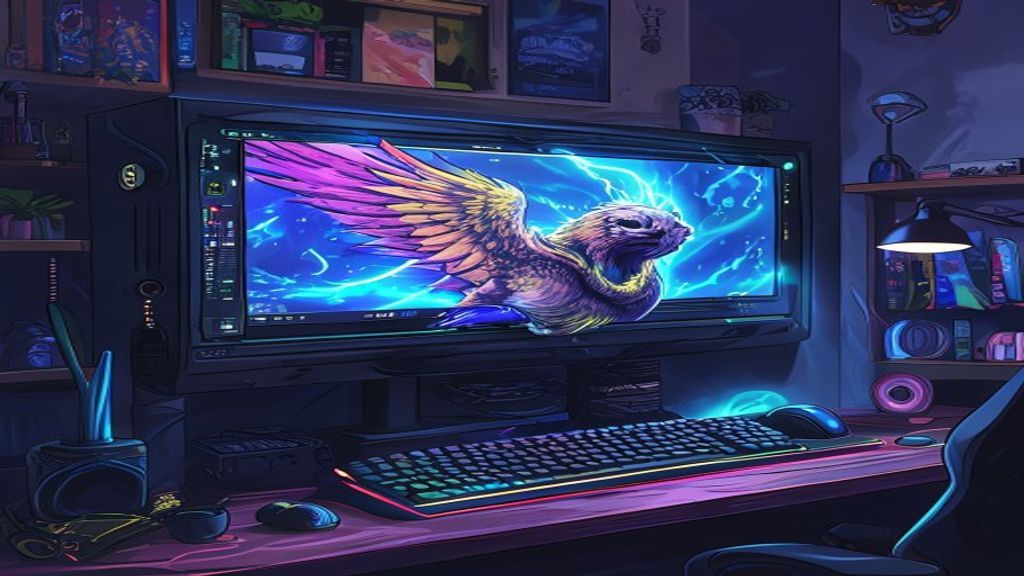
Introduction to ChimeraOS
ChimeraOS is a game-oriented Linux distribution that seeks to offer a simple, Steam-focused desktop experience, similar to SteamOS but with greater flexibility and hardware support.
What is ChimeraOS?
Born of the open source project known as »ChimeraOS», this disc is based on Arch Linux and uses the KDE Plasma desktop environment as a top layer, although it can be run in Big Picture mode for a pure console experience.
Main characteristics
- Arch Linux-based environment, with updated packages and continuous launch model.
- Optimized game mode that launches Steam in Big Picture mode when starting.
- Support for a wide variety of drivers, including Xbox, PlayStation and Bluetooth devices.
- Integrated configuration tools to adjust resolution, refreshment rate and GPU performance.
- Automatic and simple updates using the Pacman package manager.
Installation process
Installing ChimeraOS is relatively simple thanks to its hybrid ISO image that can be recorded on a USB using tools such as balenaEtcher or Rufus.
- Download the latest ISO image from the official site.
- Record the ISO on a USB drive of at least 8 GB.
- Start the computer from the USB and follow the partition wizard.
- Select the installation disk and confirm the root and swap partition.
- Wait for the installer to copy the files and configure the GRUB boot manager.
- Restart and remove the USB; the system will start directly in the game mode.
Performance and compatibility in games
Due to its Arch base, ChimeraOS benefits from the latest AMD and NVIDIA drivers, which results in frames improvements per second and lower latency.
- Native compatibility with Steam Proton titles, which allows you to play most Windows games.
- Support for emulators like RetroArch and Dolphin, facilitating the game of classic consoles.
- Possibility to install traditional desktop applications (browsers, offices) without leaving the game environment.
Community and support
Although it is a smaller project than SteamOS, ChimeraOS has an active Discord, a subreddit and a wiki where users share tricks, solve problems and propose improvements.
- Frequently updated kernel and game packages.
- Step by step guides to set specific peripherals.
- Collaboration with Proton developers to improve compatibility.
Advantages and disadvantages
Advantages
- Rolling base release that keeps the system always up to date.
- Clean and game-focused interface with full desktop option.
- Great flexibility to install additional software thanks to Pacman and AUR.
Disadvantages
- Less official documentation compared to larger distributions.
- Possible occasional instability due to frequent updates.
- A little higher hardware requirements to make the most of the latest drivers.
Conclusion
ChimeraOS represents an attractive alternative for players who want the power and customization of Arch Linux without giving up a ready-to-use game experience. Your Steam approach, combined with the flexibility of a rolling release environment, makes it a worthy option for both newcomers and Linux veterans.

