
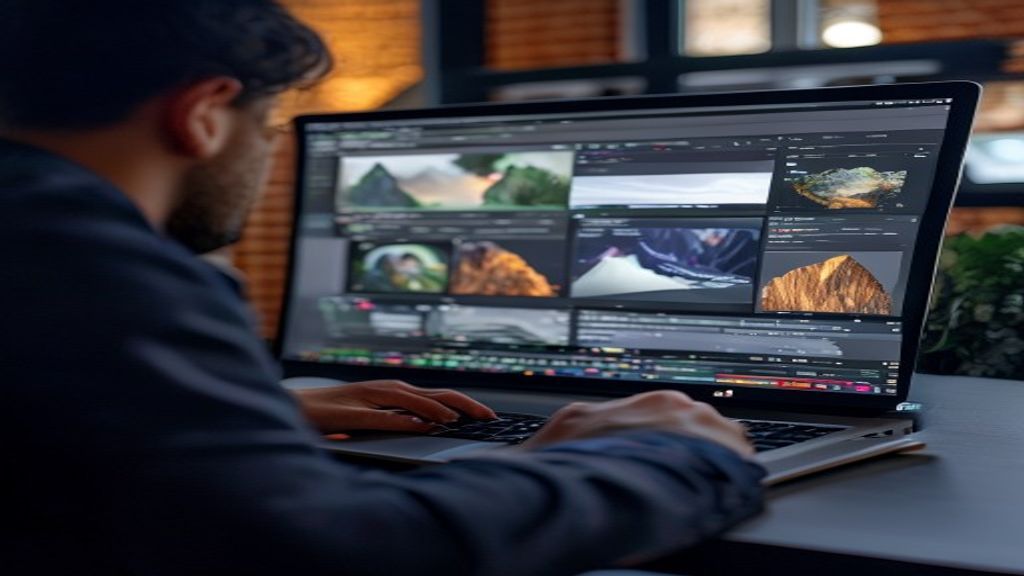
Introduction to Darktable
Darktable is an open source application designed for photographers who need a full workflow, from RAW import to final export. Unlike many owner editors, Darktable combines library management and RAW revealed functions in a single interface, allowing for non-destructive work and keeping the original file intact.
History and philosophy of the project
Started in 2009 by a group of developers passionate about photography and free software, Darktable was born in response to the lack of free alternatives capable of rivalizing with commercial programs. Its philosophy is based on transparency of the code, community collaboration and continuous user-driven improvement. Each version incorporates new tools thanks to the contributions of photographers, programmers and designers from around the world.
Main characteristics
- Non-destructive editing: all settings are saved as separate instructions, leaving the RAW file unchanged.
- Wide range of modules: from exposure, white and curved balance to advanced tools such as mist removal, perspective correction and noise reduction.
- Library management: labelling, ratings, smart collections and metadata filters that facilitate the search for thousands of photos.
- Tethered capture mode: allows to shoot the camera connected to the computer and see the results in real time within Darktable.
- Flexible export: format, size, color profile and water marks, with support for JPEG, PNG, TIFF and others.
Typical working flow in Darktable
A photographer starts importing his photos from the memory card or directly from the camera. During import, you can apply presettings, rename files and organize images in collections. Then it goes to the revealed mode, where it selects a basic module as an exposure to correct the luminosity, followed by white balance to achieve natural colors. You can then add creative modules such as glazed, tone division or selective sharpness. Each change is displayed in the real-time preview, and the history allows you to go back or compare versions. When satisfied, it exports the photo by choosing the destination, format and desired quality, always keeping the original RAW file as a source.
Performance and system requirements
Darktable is designed to be efficient in a variety of hardware settings. Although it can be run on modest machines, it benefits greatly from a multi-core CPU and OpenCL-compatible GPU to accelerate tasks such as noise reduction and the application of complex filters. It is recommended at least 8 GB of RAM, although 16 GB or more allow to work with large libraries and to perform simultaneous editions without slowing. The software is multi-platform: it has official versions for Windows, macOS and various Linux distributions, which ensures that photographers from any environment can take advantage of their functions without expensive licenses.
Complements, preadjustments and creative community
One of Darktable's strengths is its ecosystem of preadjustments and community-shared styles. Users can download preconfigured modules packages that simulate classic films, apply movie looks or improve portraits with a single click. In addition, the XMP file format allows for the exchange of adjustments between different facilities, facilitating collaboration in collective projects. Forums and repositories such as GitHub host Lua scripts that expand functionality, from automation of export tasks to integration with cloud storage services. This extensibility makes Darktable not only an editor, but a customizable platform according to the style and workflow of each photographer.
Conclusion
Darktable represents a solid and free option for anyone looking for a powerful RAW editor without giving up the freedom of open software. Its combination of library management, non-destructive editing and constant community improvement makes it an indispensable tool for both fans and professionals who want to maintain total control over their creative process.

