
Introduction
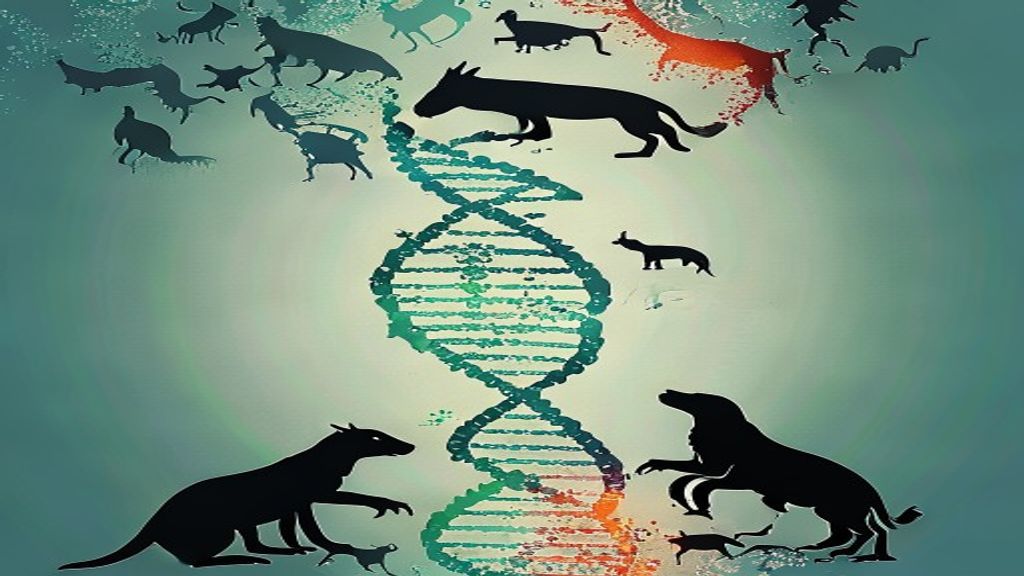
Evolution is the process by which populations of organisms change over the generations through changes in their genetic material. This concept, central to modern biology, explains the diversity of life on Earth and allows us to understand how the present species have originated from common ancestors.
Main mechanisms
The mechanisms that drive evolution are natural selection, genetic drift, gene flow and mutations. Natural selection favours those individuals whose characteristics give them a reproductive advantage in a given environment. Genetic drift, on the other hand, produces random changes in allelic frequencies, especially in small populations. The gene flow occurs when migrant individuals introduce new alleles into a population, while mutations are the ultimate source of genetic variability.
- Natural selection: survival and reproduction differential.
- Genetic derivatives: random fluctuations.
- Gender flow: exchange between populations.
- Mutations: changes in DNA.
Evidence of evolution
The evidence that supports evolutionary theory comes from multiple disciplines. The fossil record shows morphological transitions between ancient and modern groups. Comparative anatomy reveals homologous structures that indicate common ancestors. The biogeography explains the distribution of species in relation to geographical barriers and historical events. Finally, molecular biology shares DNA sequences and proteins that demonstrate quantifiable kinship relationships.
- Fossils: transition from fish to tetrapod.
- Anatomy: pentadactyl member in vertebrates.
- Biogeography: Australian marsupials.
- Molecules: similarity of the haemoglobin gene.
Impact on society and culture
Beyond pure biology, the theory of evolution has influenced fields such as medicine, agriculture and philosophy. In medicine, understanding antibiotic resistance requires seeing it as an evolutionary process. In agriculture, artificial selection has made it possible to develop more productive livestock crops and breeds. Philosophically, evolution challenges static visions of the place of the human being in nature, promoting an approach based on continuity and change.
- Medicine: drug resistance.
- Agriculture: crop improvement.
- Philosophy: a dynamic vision of life.
Examples of real-time developments
Although evolution is often seen as a process that takes place over millions of years, there are documented cases where significant changes can be observed in a few generations. A classic example is the resistance of insects to pesticides, where mosquito and cotton populations have developed alleles that give tolerance to chemical compounds in less than a decade. Another emblematic case is that of Darwin's pinches in the Galapagos Islands, whose peak size varies rapidly in response to changes in the availability of seeds during droughts. In the laboratory, experiments with bacteria such as Escherichia coli have shown the evolution of the ability to metabolize citrate under aerobic conditions after thousands of generations, demonstrating the emergence of new metabolic functions. These examples stress that evolution is a continuous and detectable process, provided that adequate temporary and spatial resolution is available.
- Resistance to pesticides in insects.
- Variation of the pinches peak according to seed availability.
- Evolution of the ability to metabolise citrate in E. coli.
Evolution and technology: genetic editing and the future
The intersection between evolutionary biology and genetic editing technologies, such as CRISPR-Cas9, is opening new ways to understand and direct evolution. Researchers can introduce specific mutations in model organisms and observe their phenotypic effects in real time, which allows to test hypotheses about the adaptivity of certain genetic variants. In addition, directed evolution is used in industry to create more effective enzymes, new generation antibiotics and crops with improved features, through iterative mutation and selection rounds. However, these capabilities raise ethical and safety questions: the release of modified organisms could affect natural ecosystems, and the possibility of designing human features requires a careful regulatory framework. Ultimately, the combination of evolutionary theory and editing tools promises to accelerate our understanding of life, while at the same time forcing us to consider responsibly the consequences of intervening in processes that have shaped biodiversity during eons.
- Genetic edition with CRISPR
- Direct evolution of enzymes
- Ethical discussion on modified organisms
Conclusion
In short, evolution is the most powerful explanatory framework of biology, uniting fossil, genetic and ecological evidence. Its real-time observation and application in biotechnology demonstrate its practical relevance. Further research on its mechanisms will enable us to face challenges such as drug resistance and climate change, while respecting the complexity of life.

