
Introduction to Fritzing
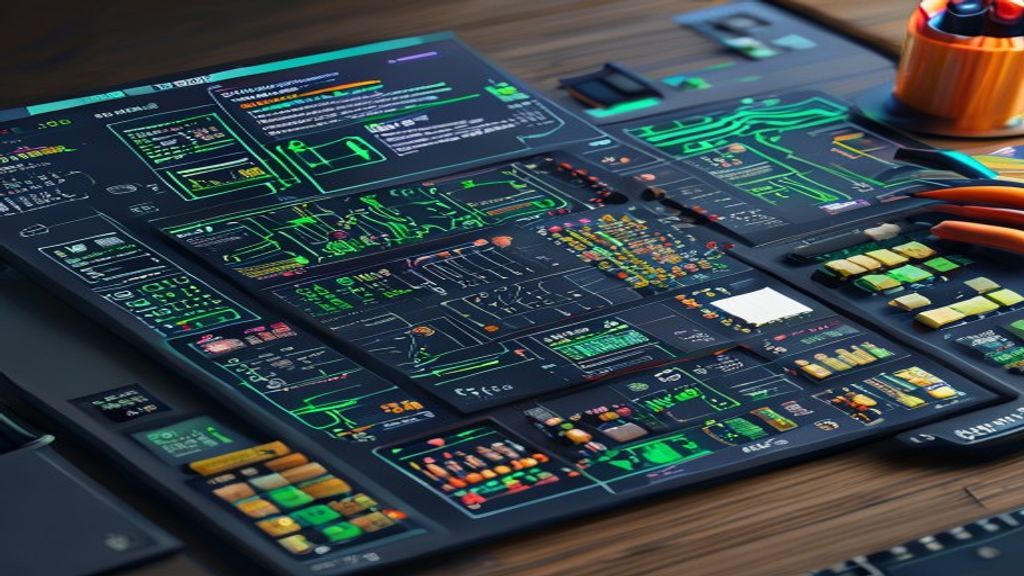
Fritzing is an open source application designed to help designers, students and electronics enthusiasts create schemas, protoboard designs and printed circuit plates intuitively. Its drag-and-drop interface and component library make the process of moving from an idea to a physical prototype much faster and more accessible.
History and philosophy of the project
Started in 2007 by researchers from the University of Applied Sciences of Potsdam, Fritzing was born with the aim of closing the gap between physical prototipation and circuit documentation. Since then it has grown thanks to a global community that contributes to new pieces, tutorials and source code improvements.
Main characteristics
- Protoboard view to mount components as you would on a test plate.
- View of scheme that generates legible diagrams according to standard standards.
- PCB view that allows you to design copper routes and generate Gerber files ready for manufacture.
- Extensive component library with thousands of community-contributed pieces.
- Export to formats such as SVG, PNG, PDF and manufacturing files.
How the protoboard view works
In this view, the user drags components from the library and places them on a graphic representation of a protoboard. The connectors are automatically joined when the pins are aligned, which reduces wiring errors and allows you to quickly view the physical layout of the circuit.
Schematics and documentation
The outline view transforms the protoboard layout into a clear electrical diagram. Fritzing follows IEC and ANSI symbols conventions, which facilitate reading by other engineers. In addition, labels, values and notes can be added directly in the scheme.
PCB design
Once the scheme is complete, the PCB view allows to define layers, draw routes and adjust track width according to current requirements. Fritzing includes a basic design rule (DRC) verification tool that helps detect short circuits and traces too close before exporting Gerber files.
Component and contribution library
The central library includes more common microcontrollers, sensors, actuators and passive components. Users can create their own parts by using the parts editor, save them in .fzpz format and share them in the official repository, thus enriching the ecosystem for all.
Export and manufacture
Fritzing allows to export the design to several formats: SVG or PNG images for documentation, PDF for manuals and Gerber files, drill and position of components for sending to PCB factories. This flexibility makes the workflow suitable for both desktop prototypes and small-scale production.
Community and learning resources
The Fritzing website features step by step tutorials, videos and a forum where users can ask and share projects. In addition, there are numerous online books and courses that use Fritzing as the main tool for teaching practical electronics and design of embedded systems.
Advantages of using Fritzing
- Friendly interface that reduces the learning curve.
- Free and open source software.
- Fluid integration between protoboard, scheme and PCB.
- Great library of components and possibility to create custom pieces.
- Suitable for education, hobby and low volume professional prototyping.
Limitations to consider
- The DRC tool is less advanced than those of professional suites such as Altium or KiCad.
- For high frequency or high density designs it may be insufficient.
- Some specialized components may be missing from the official library and require manual creation.
Conclusion
Fritzing is positioned as an accessible and powerful solution for those who want to move from an idea to a tangible circuit without the need for expensive licenses or steep learning curves. Its visual approach, supported by an active community, makes it an ideal option for educators, makers and small businesses that seek to validate concepts quickly before investing in more complex tools.
System installation and requirements
Fritzing is available for Windows, MacOS and Linux. The minimum requirements are modest: a double core processor, 2 GB RAM and at least 500 MB disk space. The installation is done by a simple installer or, in Linux, through the distribution repositories or AppImage packages.
- Download the installer from the official site.
- Run the assistant and accept the GPL license.
- Select the target folder and finish.
- When you start, you will be asked to choose a language and set up the component library.
Practical example: LED light with Arduino
To illustrate the workflow, we will design a simple light using an Arduin One, three LEDs (red, yellow and green) and resistance of 220 Ω. First, we place the Arduin in the protoboard view and add the components around.
- Drag Arduin One from the library and place it in the center.
- Place the three LEDs and their resistances in different rows.
- Connect LEDs anodes to digital pins 9, 10 and 11 by virtual cables.
- Unite the cathodes to the Arduino's land line (GND).
- In the schematic view, check that the connections appear correctly.
- Finally, it goes to PCB to generate the Gerber file if you want to make a field.
This example shows how to move from an idea to a documented design in a few minutes.
Tips to improve your designs in Fritzing
- It uses different color layers to distinguish power and data signals.
- Group related components in blocks and use the grouping function to move them easily.
- Check the scheme view frequently to make sure that all connections have a clearly defined node.
- It exports intermediate versions in SVG to include in documentation or presentations.
- Participate in the official forum to download custom pieces and share your own creations.

